

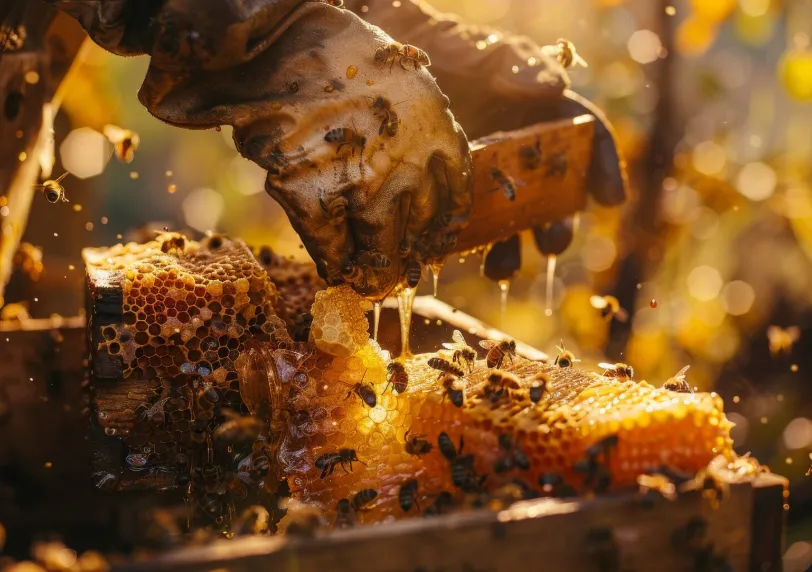

The honey aisle is full of lies. Jars labelled “pure” and “natural” often contain heated, filtered, syrup-stretched products with little connection to real beekeeping. The problem hits African honey especially hard. Genuine African raw honey comes from wild and smallholder beekeepers who harvest from forest, savannah, and mountain flora, with minimal processing. But cheap blended imports flooding global markets use the “African” label while delivering none of the quality, flavor, or health benefits. Knowing how to tell the difference protects your health, your money, and the livelihoods of real African beekeepers.
The Problem: Cheap Blends vs Real African Honey
The global honey market is flooded with adulterated products, and African honey is one of the most frequently counterfeited categories on the shelf.
What Are Cheap Blended Honey Imports?
Blended honey is a mix of bulk honey from multiple countries, often combined with rice syrup, corn syrup, or inverted sugar to cut costs. These products go through heavy heating and ultra-filtration that strip out pollen, enzymes, and flavor.
Common label language that signals a blend includes:
- “Blend of EU and non-EU honeys” with no specific country named.
- “Honey syrup” or “honey product” instead of simply “honey.”
- “Packed in” a certain country with no harvest origin listed.
- “Pasteurized” or “heat-treated,” which destroys raw honey’s natural compounds.
How This Hurts Beekeepers And Consumers
African producers cannot compete with artificially low prices set by syrup-stretched imports. Consumers lose the enzymes, antioxidants, pollen, and unique floral character that make African raw honey worth buying in the first place. The result is a market where fakes push out the real thing at every price point.
Label and Origin Checks: Your First Line of Defence
Before you open the jar, taste the honey, or run any tests, the label itself tells you a lot about what is inside. A few minutes of reading can save you from a bad purchase.
Reading The Label
Look for a clear, specific country of origin: “Product of Ethiopia,” “Harvested in Tanzania,” or “Origin: Kenya.” Avoid jars that say “blended,” “honey product,” “flavored honey,” or “pasteurized.” If the label names a packing facility but no harvest region or beekeeper, that is a red flag.
Certifications And Traceability
Trusted certifications, cooperative seals, and traceability codes add confidence. Brands that name the region, the floral source, or the beekeeping community behind the honey are far more likely to sell the real thing.
Key certifications and trust signals to look for include:
- Organic certification from a recognized body.
- Fair trade seals indicate ethical sourcing.
- Membership in recognized African beekeeping cooperatives.
- Batch or lot numbers that enable full supply chain tracing.
Price Red Flags
Authentic African honey carries real costs: manual harvesting, rural transport, small batch processing, and export logistics. If a jar of “wild African honey” costs the same as mass-produced supermarket honey, the price alone tells you something is wrong. Genuine single-origin African honey has a minimum realistic price floor that cheap blends simply cannot match.
Visual, Texture, and Crystallization Clues
Your eyes and hands can catch what labels sometimes hide. Physical characteristics reveal a lot about how honey was processed and whether it is genuine.
Color And Clarity
Authentic African honey ranges from golden amber to deep dark brown, depending on the floral source and region. It is usually slightly cloudy because of natural pollen, wax micro-particles, and propolis. Ultra-clear, perfectly uniform honey with no cloudiness at all has likely been heated and filtered to remove everything that makes raw honey valuable.
Texture And Flow
Real raw honey is thick and viscous. When drizzled from a spoon, it forms a stable ribbon that folds on itself before slowly merging into the surface. Very runny, watery “African” honey suggests dilution with water or syrups, or heavy heat processing that has broken down the natural structure.
Crystallization Behavior
All raw honey crystallizes over time. African varieties often develop a semi-solid, creamy texture within weeks or months of harvest, depending on the floral source.
Here is how crystallization differs between real and fake honey:
- Authentic raw honey turns semi-solid or creamy naturally, with a smooth, spreadable texture.
- Cheap blended imports stay perfectly liquid for unusually long periods because of added syrups or high-temperature processing.
- Unnatural glassy or gritty crystals can signal syrup contamination rather than natural sugar crystallization.
If a jar of “raw” honey has stayed crystal clear and pourable for a year on the shelf, it likely is not raw.
Aroma and Flavor: The African Wild Signature
Taste and smell are two of the most reliable checks you can perform without any equipment. Real African honey has a depth that fakes cannot replicate.
The Nose Test
Open the jar and inhale. Authentic African raw honey carries a complex aroma tied to its floral origins: smoky, woody, herbal, or deeply floral, depending on whether it comes from acacia, savannah wildflowers, or forest blossoms. Cheap blends smell flat, one-note, or almost like plain sugar with no character.
Depth of flavor
Take a small taste and let it sit on your tongue. Real African honey delivers layered flavors: fruity, earthy, herbal, sometimes tangy, with a finish that lingers. Fake or heavily processed honey tastes like simple sugar syrup. The flavor is thin, sweet, and gone in seconds.
Practical At-Home Checks
Simple kitchen tests can flag heavy adulteration, though none of them replaces proper lab analysis. Do not use them as a final verdict, but as a first pass.
Simple Screening Tests
These quick checks help detect the most obvious fakes:
- Water glass test. Drop a spoonful of honey into a glass of cold water. Pure honey sinks and holds its shape. Adulterated honey dissolves quickly.
- Bread test. Spread honey on bread and wait a few minutes. Real honey lets the bread stay relatively firm. Syrup-heavy fakes soak in and make the bread soggy.
- Viscosity check. Tilt the jar slowly. Authentic raw honey moves sluggishly. Thin, fast-flowing honey likely contains added water or syrup.
Viral hacks like the “flame test” or “thumb test” are unreliable on their own. They catch extreme fakes but miss sophisticated adulteration. Never rely on a single home test to confirm authenticity.
When Lab Testing Is The Only Answer
Advanced methods like NMR profiling, pollen analysis, and carbon isotope testing detect syrups and adulterants that no kitchen test can catch. Reputable African exporters and speciality brands invest in third-party lab reports and share them with buyers on request.
Where and How to Buy Authentic African Raw Honey
Sourcing matters as much as testing. The right buying channels dramatically reduce your chances of ending up with a fake product.
Best Places To Source Genuine African Honey
Buy directly from African beekeeping cooperatives, vetted speciality brands, or ethical importers with documented supply chains. Farmers’ markets and speciality food shops that carry single-origin products with named regions and floral sources are consistently more reliable than anonymous supermarket shelves.
Questions To Ask Sellers
When buying in quantity or paying premium prices, ask the seller directly about these details:
- What specific region and floral source does this honey come from?
- Is the honey raw and unfiltered, and at what temperature was it processed?
- What harvest season does this batch represent?
- Are lab test results or certifications available for review?
Sellers who answer these questions clearly and without hesitation are the ones worth buying from.
Why Choosing Authentic African Raw Honey Matters
Authentic raw honey is worth the effort to find. The benefits reach far beyond what ends up in your jar.
Raw, minimally processed honey retains enzymes, pollen, antioxidants, and antimicrobial compounds that are destroyed by heavy heating and filtration. Paying a fair price for authentic African honey supports biodiversity, sustains rural livelihoods, and funds sustainable beekeeping practices across the continent. With a few label, visual, and taste checks, any consumer can confidently avoid fake “African” honey and choose the real thing instead.
Takeaway
Spotting authentic African raw honey takes attention, but it is not complicated. Check the label for specific origins. Look at the color, texture, and crystallization. Smell and taste for complexity. Ask sellers direct questions. Walk away from prices that do not make sense.
Brands like Fleures Honey exist to make that choice effortless. This brand traces back to documented African beekeeping communities, harvested raw, minimally processed, and backed by full lab testing and traceability data. When you open a jar of Fleures, you taste exactly what the bees made and nothing else. Try them and experience the real flavor of African raw honey the way it was meant to be.